May 7

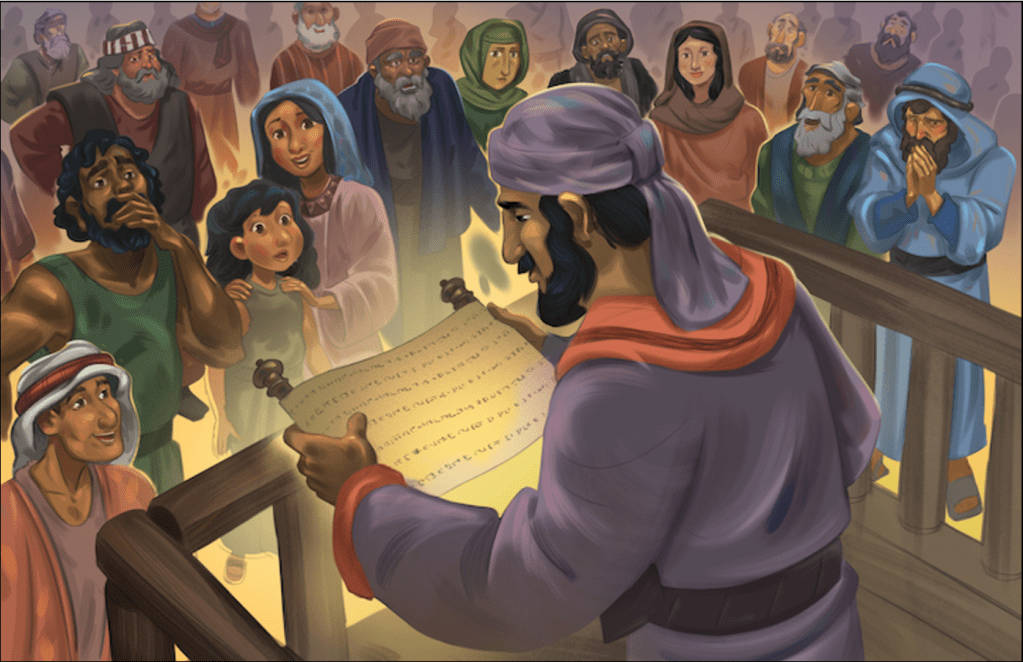
Nehemiah Rebuilt the Walls (Nehemiah 1–7)

Dear families,

Recall the last time you were faced with devastating news or found yourself filled with angst, worry, or fear. How did you respond?

Anger and bitterness are common reactions to bad news. We may feel tempted to isolate ourselves from others. Grief is complex, and responses vary greatly. However, according to the Bible, Nehemiah’s response is the best response.

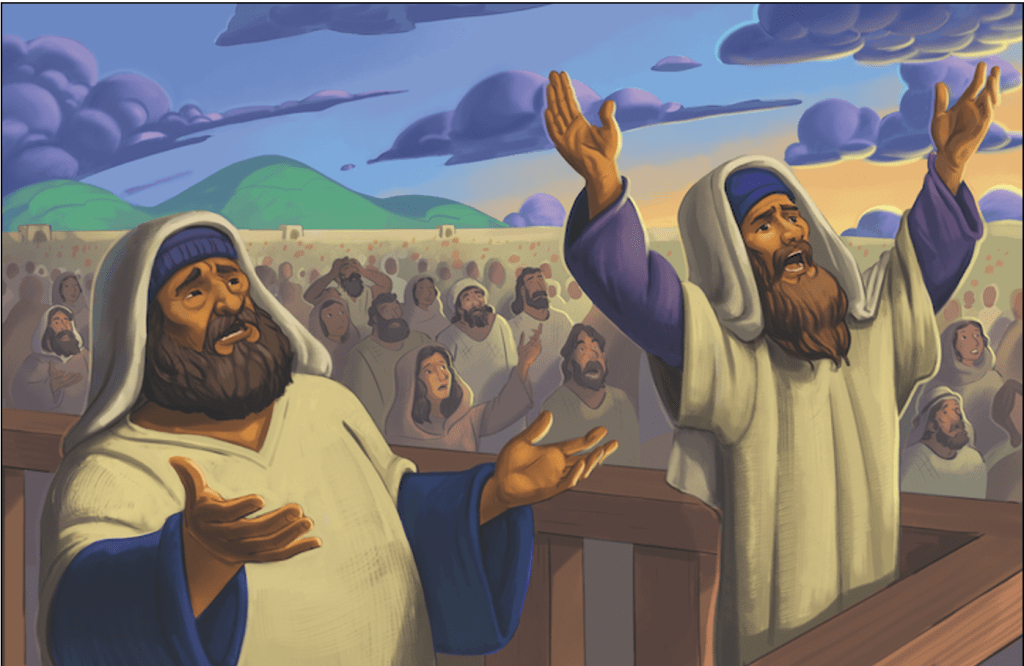
Read about Nehemiah’s general response in Nehemiah 1:4. Then in Nehemiah 1:5-11, we discover the specific way that Nehemiah prayed in response to this devastating news. He recognized God’s faithfulness, requested God’s ear, confessed sin, and committed his people to the Lord’s care.

Nehemiah began his prayer with a recognition of the faithfulness of God. He indicated his confidence that God had been and would continue to be faithful. He then requested God’s ear. Though Nehemiah was confident that God heard him, he opened and closed his prayer of dependence by begging God to listen to his request. 

Why did Nehemiah pray this way? Likely, he was further demonstrating his deep conviction that God and God alone is able to work in such a way that would bring about restoration.

Nehemiah’s prayer also demonstrates his belief that sin has serious consequences. He confessed his own sin and the sin of his family, recognizing that God was fully aware of their sin, but also that this sin was not to be taken lightly and needed to be dealt with.

Finally, he committed his family—the Jewish people—into the hands of this faithful and just God. He trusted God to be faithful to His word and His people. Though Nehemiah didn’t know what the outcome would be, he was confident in his God, that He would remain faithful no matter what.

Nehemiah’s response demonstrated a deep love, trust, and confidence in God that is exemplary for each of us. When we face moments of devastation, we can—with deep dependence—turn to God and find comfort.

Check out The Gospel Project At Home for resources designed to help you lead a family worship experience as well as suggestions for morning and evening prayer times and family activities.

FAMILY TALKING POINTS

CHRIST CONNECTION

This is the big idea of how this week’s Bible story points to Jesus.

  • Babies & Toddlers: Nehemiah helped God’s people rebuild the walls around their city. The walls protected the people from their enemies. Jesus protects us from our enemies.
  • Younger Preschool: Nehemiah helped God’s people fix the walls around their city. The walls protected the people from their enemies. Jesus protects us from our enemies.
  • Older Preschool: Nehemiah helped God’s people fix the walls around their city. The walls protected the people from their enemies. Jesus protects us from our enemies. When we know and love Jesus, He keeps us safe from sin and we will live with Him forever.
  • Kids: Nehemiah led the people to rebuild the walls around Jerusalem to protect them from their enemies. Jesus came to protect us from our greatest enemies, sin and death. He died on the cross and rose from the dead to rescue everyone who trusts in Him.

BIG PICTURE QUESTION & ANSWER

This is an important biblical truth that your child will encounter each week of this unit.

  • Younger Preschool: How should we feel when we make wrong choices? When we make wrong choices, we should feel sorry that we have disobeyed God and want to obey Him.
  • Older Preschool: How should we feel when we sin? When we sin, we should feel sorry that we have disobeyed God and choose to obey Him.
  • Kids: How should we feel when we sin? When we sin, we should feel sorry that we have disobeyed God and want to turn from our sin because we love Him.

KEY PASSAGE

This is a Bible verse that relates to what your child will encounter each week of this unit.

  • Babies & Toddlers: We should feel sorry when we disobey God. 2 Corinthians 7:10
  • Younger Preschool: We should feel sorry when we disobey God and want to obey Him. 2 Corinthians 7:10
  • Older Preschool: Godly grief produces a repentance that leads to salvation without regret. 2 Corinthians 7:10
  • Kids: For godly grief produces a repentance that leads to salvation without regret, but worldly grief produces death. 2 Corinthians 7:10

** Next week: Ezra Read the Law (Ezra 7–10; Nehemiah 8)

April 30

Esther Saved Her People (Esther)

Dear families,

You may never have said it aloud before, but there is a good chance that you have thought it: “If I just had ________ [fill in the blank with your greatest desire], then following Jesus would be so much easier.” What is your greatest desire? For some it may be money; for others, possessions; for others, power or a relationship or a feeling.

We live in a broken world and may often fantasize about what life would be like if our ideals came to pass. We may even hurt or mistreat others in pursuit of our dreams—to gain that which we believe has the greatest importance. But the reality is that even if we have all that we want, there is still a great temptation to desire more and continue seeking our own good at the expense of others.

This sinful reality is part of what makes the events in the Book of Esther so surprising. We observe Mordecai’s journey from faithful adoptive father of a young girl in a foreign land to his becoming the king’s right-hand man.

Mordecai was faithful. He was faithful to take in Esther, his cousin who was without father or mother. He was faithful to sit, wait, and watch every day at the gate of the king’s palace to see what God would do through this beautiful young woman. He was faithful to speak up with boldness and confidence, even at the threat of death. And he was faithful to lead beside the king in an honorable way seeking the flourishing of the kingdom.

Mordecai rose to a position of great power and authority. Many figures in power tend to forget their roots, turning to selfishness and unfaithfulness. Mordecai, however, did not. Read Esther 10:3.

In our temptation to seek our own pleasure, we must remember that our Savior, Jesus Christ, “did not come to be served, but to serve, and to give his life as a ransom for many” (Mark 10:45). In remembering the work of Christ, we find not only an example to follow but also the power to do the same.

Christ in us seeks the good of those around us. No matter how high or low our rank in the world, He is always good and always desires that we seek the good of those around us, for His glory.

Check out The Gospel Project At Home for resources designed to help you lead a family worship experience as well as suggestions for morning and evening prayer times and family activities.

FAMILY TALKING POINTS

CHRIST CONNECTION

This is the big idea of how this week’s Bible story points to Jesus.

  • Babies & Toddlers: God had a plan for Esther to rescue the Jews. God also had a plan for His Son, Jesus, to come into the world and rescue all people.
  • Younger Preschool: Haman’s evil plan could not stop God. God had a plan for Esther to rescue the Jews. By saving the Jews, God made the way for His Son, Jesus, to come into the world.
  • Older Preschool: God’s plan was to send the Messiah into the world through Abraham’s family. Haman’s evil plan could not stop God. God had a plan for Esther to rescue His people. By saving the Jews, God made the way for His Son, Jesus, to come into the world.
  • Kids: God was in control over Haman’s evil plan to destroy the Jews. Like Haman, Satan wants to ruin God’s plan and destroy believers. Satan thought he had won when Jesus died on the cross, but God raised Jesus from the dead and defeated Satan once and for all. All who believe in Jesus are rescued from sin and death.

BIG PICTURE QUESTION & ANSWER

This is an important biblical truth that your child will encounter each week of this unit.

  • Younger Preschool: How should we feel when we make wrong choices? When we make wrong choices, we should feel sorry that we have disobeyed God and want to obey Him.
  • Older Preschool: How should we feel when we sin? When we sin, we should feel sorry that we have disobeyed God and choose to obey Him.
  • Kids: How should we feel when we sin? When we sin, we should feel sorry that we have disobeyed God and want to turn from our sin because we love Him.

KEY PASSAGE

This is a Bible verse that relates to what your child will encounter each week of this unit.

  • Babies & Toddlers: We should feel sorry when we disobey God. 2 Corinthians 7:10
  • Younger Preschool: We should feel sorry when we disobey God and want to obey Him. 2 Corinthians 7:10
  • Older Preschool: Godly grief produces a repentance that leads to salvation without regret. 2 Corinthians 7:10
  • Kids: For godly grief produces a repentance that leads to salvation without regret, but worldly grief produces death. 2 Corinthians 7:10

** Next week: Nehemiah Rebuilt the Walls (Nehemiah 1–7)

Unit 18: The People Prepared

Unit Description: God had made good on His promise to bring the people back into the land, but they were still waiting on another promise: for God to send the ultimate Rescuer. God’s people began to prepare for the Messiah’s arrival, but even so, as always, they couldn’t escape the allure of sin.

Big Picture Question
Preschool: How should we feel when we sin? When we sin, we should feel sorry that we have disobeyed God and choose to obey Him.
Elementary: How should we feel when we sin? When we sin, we should feel sorry that we have disobeyed God and want to turn from our sin because we love Him.

Key Passage
2 Corinthians 7:10 For godly grief produces a repentance that leads to salvation without regret, whereas worldly grief produces death.
Key Passage Phrase: We should feel sorry when we disobey God. 2 Corinthians 7:10

Schedule:
April 30: 9 & 11 Preschool 4 and under + 4pm Discipleship Hour
May 7: 9& 11 Preschool 4 and under. No Discipleship Hour (4pm Members’ Meeting)
May 14: 9 & 11 Preschool 4 and under. No Discipleship Hour
May 21: 9 & 11 Preschool 4 and under + 4pm Discipleship Hour (Last Discipleship Hour before summer break)
May 28: Outdoor Service at 10:00am (No Childcare)


April 23

God Can Always Be Trusted (Jeremiah 31)
Unit 17, Session 4

Dear families,

If you’re a parent or a spouse, there’s a strong likelihood that at some point you have had to say the same thing to the same person over and over to get your point across. Some things are so important they are worth repeating. And some people are so quick to forget, we must repeat.

For example, each of my four children have gone through seasons when brushing their teeth was such a chore that you would have thought they were being asked to eat nails. My wife and I would remind them dozens of times in the morning and dozens of times in the evening to brush their teeth, and yet still we would later find evidence that it didn’t happen. I feel confident none of them were belligerent in wanting their teeth to rot, but we were loving enough to remind them that this was likely to happen if they didn’t remember to complete this menial task a couple of times a day.

In Jeremiah 31, there is a phrase that is repeated by the Lord to the hearer of these words. The phrase, “the LORD’s declaration” occurs 10 times in these 40 verses. These words even appear at times in the middle of a thought or sentence, uniquely placed to garner great attention. In addition the phrase, “This is what the Lord says” occurs seven times. Clearly, the Lord wants the hearers to be abundantly clear from whom these words are coming.

We are most certainly forgetful people, often forgetting the smallest of details and even the most significant of facts. The Lord knows us on the deepest level and knows how great our need is for direct reminders.

Jeremiah 31 contains difficult truths and delightful promises. God knows that the hearer is likely to bristle at the warnings and rejoice in the hope, but he also seemingly wants to ensure that we who read these words do not forget that they are His words.

As we read the Bible, it is crucial that we recall the voice behind the words: the voice of God. The only One of highest authority and knowledge and good. Maybe you need to remember as you read and listen to God’s Word that this is the Lord’s declaration.

Check out The Gospel Project At Home for resources designed to help you lead a family worship experience as well as suggestions for morning and evening prayer times and family activities.

FAMILY TALKING POINTS

CHRIST CONNECTION

This is the big idea of how this week’s Bible story points to Jesus.

  • Babies & Toddlers: Jeremiah told of God’s plan to forgive sin and help people want to obey God. Jesus made God’s words come true. God forgives our sin through His Son, Jesus.
  • Younger Preschool: God’s words are always true, so we can always trust God. Jeremiah told of God’s plan to forgive sin and help people want to obey God. Jesus made these words come true. God forgives our sin through His Son, Jesus.
  • Older Preschool: Jeremiah’s message was good! God’s words are always true, so we can always trust God. Jeremiah told about a day when God would forgive sin and change people’s hearts. Jesus made these words come true. God forgives our sin through His Son, Jesus.
  • Kids: God’s words brought hope to God’s people because His words were true. God can always be trusted. Jeremiah told about a day when God would forgive sin and change people’s hearts. Jesus’ death and resurrection provides forgiveness of sins. Through Jesus, we have new hearts and life with God forever.

BIG PICTURE QUESTION & ANSWER

This is an important biblical truth that your child will encounter each week of this unit.

  • Younger Preschool: Can God be trusted? Yes, we can trust whatever He has said.
  • Older Preschool: Can God be trusted? Yes, God cannot lie, so we can trust whatever He has said.
  • Kids: Can God be trusted? Yes, God cannot lie or ever be wrong, so we can trust whatever He has said.

KEY PASSAGE

This is a Bible verse that relates to what your child will encounter each week of this unit.

  • Babies & Toddlers: Trust in the Lord. Jeremiah 17:7
  • Younger Preschool: The person who trusts in the Lord is blessed. Jeremiah 17:7
  • Older Preschool: The person who trusts in the LORD, whose confidence indeed is the LORD, is blessed. Jeremiah 17:7
  • Kids: The person who trusts in the LORD, whose confidence indeed is the LORD, is blessed. Jeremiah 17:7

** Next week: Esther Saved Her People (Esther)

April 16

The People Rebuilt the Temple (Ezra 2–6)
Unit 17, Session 3

Dear families,

Imagine this for a moment: It’s late Saturday night, and you’ve been out of the house all day. You’ve gone from place to place with more to do than seemed possible when you looked at all of it on the calendar. You’ve just returned home and sat down for dinner. Suddenly you remember that tomorrow is Sunday. You quickly recall that you are scheduled to serve with preschoolers tomorrow morning, your small group is having lunch together after church, and you are yet to plan out this upcoming week—which is just as packed as your weekend has been. The thought crosses your mind, What if I just sat this one out tomorrow?

Does this scenario hit close to home?

In Ezra 3, as the work had begun to rebuild the temple, there was an eager desire among God’s people, leading them to anticipate what that place would afford them upon its completion. As the people worked and waited, even in the midst of their exhaustion, they made time to worship.

Read Ezra 3:6. Not only was the temple incomplete, but the first stage of the build was not yet done. Still, the laborers did not forget or fail to keep the purpose in front. The goal was not the temple; it was the Lord.

We often find ourselves in scenarios like the one above, ready to make excuses to not do the things that matter most because we’ve misplaced our priorities—or at least lost sight of them in the whirlwind of life. Our decisions reflect what has the seat of greatest importance in our lives.

Hebrews 10:24-25 says, “And let us consider one another in order to provoke love and good works, not neglecting to gather together, as some are in the habit of doing, but encouraging each other, and all the more as you see the day approaching.”

Understanding Christ to be our greatest purpose and prize ought to direct our paths toward prioritizing our lives around Christ and His church. Not only will this be good for us, but it will be good for the rest of God’s children as well. When we are eager to be with the Lord and His people, not only will we be productive, but we will be truly satisfied.

Check out The Gospel Project At Home for resources designed to help you lead a family worship experience as well as suggestions for morning and evening prayer times and family activities.

FAMILY TALKING POINTS

CHRIST CONNECTION

This is the big idea of how this week’s Bible story points to Jesus.

  • Babies & Toddlers: God’s people rebuilt the temple where they could worship God. Years later, God sent His Son, Jesus, to be with His people on earth.
  • Younger Preschool: God’s people rebuilt the temple so they would have a place to worship God. Years later, God sent His Son, Jesus, to be with His people on earth.
  • Older Preschool: God’s people rebuilt the temple so they would have a place to worship God. Years later, God sent His Son, Jesus, to be with His people on earth. Jesus gave us something better than the temple; He gave us Himself. Jesus is with us wherever we go.
  • Kids: God’s people rebuilt the temple so they would have a place to worship God. Years later, God sent His Son, Jesus, to be with His people. Now, God does not dwell with His people through the temple. Instead, God dwells directly with His people through His Spirit. Jesus provided something better than the temple; He gives us Himself.

BIG PICTURE QUESTION & ANSWER

This is an important biblical truth that your child will encounter each week of this unit.

  • Younger Preschool: Can God be trusted? Yes, we can trust whatever He has said.
  • Older Preschool: Can God be trusted? Yes, God cannot lie, so we can trust whatever He has said.
  • Kids: Can God be trusted? Yes, God cannot lie or ever be wrong, so we can trust whatever He has said.

KEY PASSAGE

This is a Bible verse that relates to what your child will encounter each week of this unit.

  • Babies & Toddlers: Trust in the Lord. Jeremiah 17:7
  • Younger Preschool: The person who trusts in the Lord is blessed. Jeremiah 17:7
  • Older Preschool: The person who trusts in the LORD, whose confidence indeed is the LORD, is blessed. Jeremiah 17:7
  • Kids: The person who trusts in the LORD, whose confidence indeed is the LORD, is blessed. Jeremiah 17:7

** Next week: God Can Always Be Trusted (Jeremiah 31)

April 9

Zechariah Gave Hope (Zechariah 13–14)

Dear families,

Peace and security are words often heard in the whirlwind of our news cycles. They are used as ideas or desires that require work to achieve. They are used in the negative sense of not being a current reality. They are used as the aim, answer, or solution to the world’s problems.

Though the idea of peace and security are not foreign to our vernacular, they are most certainly foreign to much of our world’s reality. It is hard to find a pocket of the earth that might be described with these terms. Rather, what is most found is chaos and fear. 

When we understand the true impact of sin on the world, this comes as no surprise. It’s not shocking to see the news of war and violence. It does not bring amazement to hear of murder and strife. There is no astonishment at the experience of disappointment or pain. Because we know that we live in a world riddled with sin and its implications.

Read the words of Zechariah 14:11. What comes to mind? “People will live there, and never again will there be a curse of complete destruction. So Jerusalem will dwell in security.”

Are you struck by the thought of such a place that could be described as secure? Are you left longing for that to be your reality? Are you doubtful that this could ever be a reality?

Ultimately, this is a promise that is sure to happen. This promise is reiterated in Deuteronomy 7:7-9:

“The LORD had his heart set on you and chose you, not because you were more numerous than all peoples, for you were the fewest of all peoples. But because the LORD loved you and kept the oath he swore to your ancestors, he brought you out with a strong hand and redeemed you from the place of slavery, from the power of Pharaoh king of Egypt. Know that the LORD your God is God, the faithful God who keeps his gracious covenant loyalty for a thousand generations with those who love him and keep his commands.”

This promise was for God’s people then, and it is for all who follow Jesus today as well. This peace and security is ours in Christ. As sure as Christ has come, lived, died, and risen, so can we find rest that this promise is true and this day will come.

Check out The Gospel Project At Home for resources designed to help you lead a family worship experience as well as suggestions for morning and evening prayer times and family activities.

FAMILY TALKING POINTS

CHRIST CONNECTION

This is the big idea of how this week’s Bible story points to Jesus.

  • Babies & Toddlers: God would one day set up a new and better kingdom with a new and better King—Jesus. God kept His promise by sending Jesus. Because of Jesus, we can have hope and forgiveness of sins by trusting in Him.
  • Younger Preschool: Zechariah spoke a message of hope to God’s people. God would one day set up a new and better kingdom with a new and better King. God kept His promise by sending Jesus. Because of Jesus, we can have hope and forgiveness of sins by trusting in Him.
  • Older Preschool: Zechariah spoke a message of hope to God’s people. God would one day set up a new and better kingdom with a new and better King. God kept His promise by sending Jesus. Because of Jesus, we can have hope and forgiveness of sins by trusting in Him.
  • Kids: Zechariah spoke a message of hope to God’s people. God would one day set up a new and better kingdom with a new and better King. God kept His promise by sending Jesus. Because of Jesus, we can have hope and forgiveness of sins by trusting in Him.

BIG PICTURE QUESTION & ANSWER

This is an important biblical truth that your child will encounter each week of this unit.

  • Younger Preschool: Can God be trusted? Yes, we can trust whatever He has said.
  • Older Preschool: Can God be trusted? Yes, God cannot lie, so we can trust whatever He has said.
  • Kids: Can God be trusted? Yes, God cannot lie or ever be wrong, so we can trust whatever He has said.

KEY PASSAGE

This is a Bible verse that relates to what your child will encounter each week of this unit.

  • Babies & Toddlers: Trust in the Lord. Jeremiah 17:7
  • Younger Preschool: The person who trusts in the Lord is blessed. Jeremiah 17:7
  • Older Preschool: The person who trusts in the LORD, whose confidence indeed is the LORD, is blessed. Jeremiah 17:7
  • Kids: The person who trusts in the LORD, whose confidence indeed is the LORD, is blessed. Jeremiah 17:7

** Next week: The People Rebuilt the Temple (Ezra 2–6)

April 2

Unit 17, Session 1
God Delivered His People (Ezra 1)

Dear families,

Rest. It’s a word that conjures up different thoughts in different people from different circumstances. For some, rest brings to mind a desire to momentarily break from the chaos of life to sleep, relax, and even recover. For others, rest is an unrealistic hope as they navigate a non-stop schedule of busyness. Yet for others, the word rest suggests an uneventful, quiet life of the mundane.

Whether it’s a nap, a vacation, or boredom that comes to mind when you think of rest, it is likely a word that triggers some desire or response. And almost universally, the thought of rest is primarily physical. 

The Bible teaches that rhythms of rest are good and even necessary for us; however, the Bible’s primary teaching on rest refers to the spiritual. In Ezra 1, God’s remnant is instructed to recover from their exile with … work. 

This work would be costly, demanding, and long; but this work actually aimed to bring rest. How could this be so? Because their work was to build the place where they would encounter the living God, the One who gives true rest to the soul. 

In Matthew 11:28-30, Jesus said, “Come to me, all of you who are weary and burdened, and I will give you rest. Take up my yoke and learn from me, because I am lowly and humble in heart, and you will find rest for your souls. For my yoke is easy and my burden is light.” 

Though God clearly teaches us the benefits of a rhythm of physical rest—Sabbath—He ultimately uses physical rest to teach us of our need for a greater spiritual rest—a rest for our soul, a rest that comes in understanding that we cannot save ourselves, but God has done everything necessary through Christ to save us. We are invited into this rest through the substitutionary atonement of Jesus. 

The people of God are instructed in Ezra 1 to begin the arduous work of building God’s dwelling place. But this work would ultimately lead to their place of rest—in God’s presence.

We too may find ourselves physically exhausted from the demanding work of faithfully following the Lord in the context He has placed us. But take heart, there is rest for your soul in the presence of God and the person of Christ.

Check out The Gospel Project At Home for resources designed to help you lead a family worship experience as well as suggestions for morning and evening prayer times and family activities.

FAMILY TALKING POINTS

CHRIST CONNECTION

This is the big idea of how this week’s Bible story points to Jesus.

  • Babies & Toddlers: God keeps His promises. God chose King Cyrus as part of His plan. God chose Jesus as His plan to rescue and bring us home to His kingdom forever.
  • Younger Preschool: God keeps His promises. He chose King Cyrus as part of His plan to bring His people home from Babylon. God chose Jesus as His plan to rescue sinners and bring us home to His kingdom forever.
  • Older Preschool: God keeps His promises. He chose King Cyrus as part of His plan to bring His people home from Babylon. King Cyrus reminds us of Jesus. God chose Jesus as His plan to rescue sinners and bring us home to His kingdom forever.
  • Kids: God always keeps His promises. God chose to use King Cyrus in His plan to graciously deliver His people from exile. King Cyrus’ action to free the people reminds us of Jesus, whom God chose to rescue sinners and bring us to our true home in His kingdom of grace.

BIG PICTURE QUESTION & ANSWER

This is an important biblical truth that your child will encounter each week of this unit.

  • Younger Preschool: Can God be trusted? Yes, we can trust whatever He has said.
  • Older Preschool: Can God be trusted? Yes, God cannot lie, so we can trust whatever He has said.
  • Kids: Can God be trusted? Yes, God cannot lie or ever be wrong, so we can trust whatever He has said.

KEY PASSAGE

This is a Bible verse that relates to what your child will encounter each week of this unit.

  • Babies & Toddlers: Trust in the Lord. Jeremiah 17:7
  • Younger Preschool: The person who trusts in the Lord is blessed. Jeremiah 17:7
  • Older Preschool: The person who trusts in the LORD, whose confidence indeed is the LORD, is blessed. Jeremiah 17:7
  • Kids: The person who trusts in the LORD, whose confidence indeed is the LORD, is blessed. Jeremiah 17:7

** Next week: Zechariah Gave Hope (Zechariah 13–14)

Unit 17: The People Return

Unit Description: 
God’s time of disciplining His people had been completed, and true to His word, He returned them to the land of promise. Once there, they began to rebuild the temple—the important reminder that God was with them, that He is faithful, and that He can always be trusted.

Big Picture Question & Answer:
Younger Preschool: Can God be trusted? Yes, we can trust whatever He has said.
Older Preschool:  Can God be trusted? Yes, God cannot lie, so we can trust whatever He has said.
Elementary: Can God be trusted? Yes, God cannot lie or ever be wrong, so we can trust whatever He has said.

Key Passage:
The person who trusts in the Lord, whose confidence indeed is the Lord, is blessed. Jeremiah 17:7
Key Passage Phrase: The person who trusts in the Lord is blessed.

Schedule:
April 2 (9am, 11am & 4pm): God Delivered His People (Ezra 1)
April 9 (9am & 11am only): Zechariah Gave Hope (Zechariah 13-14)
April 16 (9am, 11am & 4pm): The People Rebuilt the Temple (Ezra 2-6)
April 23 (9am, 11am & 4pm): God Can Always be Trusted (Jeremiah 31)

March 26

Unit 16, Session 4
God Is Present with Us (Isaiah 7)

Dear families,

Have you ever heard someone say something along the lines of, “God’s promise of the future should give you hope today”? Maybe you’ve heard it dozens of times or said it just as many. In part, this saying stands because we believe the Bible teaches this principle; however, at the gut level, this idea can be challenging to hear and believe.

In Isaiah 7, God reminded Ahaz through the prophet Isaiah that he had ample reason to trust God. The evidence? A future promise. In a moment where it would have made sense to the human mind to reference a past experience or previous fulfillment, God chose to offer hope with a word about something that had not yet happened.

That future promise was the incarnation of Jesus Christ. God promised Christmas would come in order to encourage Ahaz to trust the Lord in that moment.

In hindsight, it is easy for us to read this and understand that God was forecasting a promise that we know He would ultimately keep. However, at the moment, this must have been perplexing to hear.

When we make our way through the New Testament and discover some of the beautiful and hopeful promises of the second return of Christ, the eternal joy of God’s people, and the faithfulness of God through trial and tribulation, we too might be tempted to wonder if it will actually happen.

Numbers 23:19 says, “God is not a man, that he might lie, or a son of man, that he might change his mind. Does he speak and not act, or promise and not fulfill?” God is faithful. We can look to the past and find a record of this truth, which means we can look to the future with continued confidence. God is not a liar.

Though not overt, our faithlessness in the face of His future promises suggest that we at least think there may be a chance that He is not always true to His Word and faithful to fulfill His promises. Yet He will not waver, and we can set our faith in that.

Yes, be thankful for God’s faithfulness in the past, but also be confident in His future promises. God is present with us. He will not change His mind, His character, or His Word.

Check out The Gospel Project At Home for resources designed to help you lead a family worship experience as well as suggestions for morning and evening prayer times and family activities.

FAMILY TALKING POINTS

CHRIST CONNECTION

This is the big idea of how this week’s Bible story points to Jesus.

  • Babies & Toddlers: God told Isaiah about His plan to send a baby named Immanuel. One of Jesus’ names is Immanuel. Immanuel means “God with us.”
  • Younger Preschool: God told Isaiah about His plan to send someone named Immanuel. Jesus is the One God promised to send. One of Jesus’ names is Immanuel. Immanuel means “God with us.”
  • Older Preschool: Isaiah said that God was going to send someone named Immanuel. God’s promise came true when Jesus was born. One of Jesus’ names is Immanuel. The name Immanuel means “God with us.”
  • Kids: God is present with us. He sent prophets to His people, even in captivity, and promised to send Immanuel, which means “God with us.” Jesus fulfilled this promise when He came to earth and was born of a virgin. Jesus is our Immanuel, God with us.

BIG PICTURE QUESTION & ANSWER

This is an important biblical truth that your child will encounter each week of this unit.

  • Younger Preschool: Where is God? God is everywhere and is always with us.
  • Older Preschool: Where is God? God is everywhere and is always with us.
  • Kids: Where is God? God is in all places at all times and is always with His people.

KEY PASSAGE

This is a Bible verse that relates to what your child will encounter each week of this unit.

  • Babies & Toddlers: The Lord your God is with you. Zephaniah 3:17 
  • Younger Preschool: The Lord your God is with you. Zephaniah 3:17
  • Older Preschool: “The LORD your God is among you, a warrior who saves. He will rejoice over you with gladness … He will delight in you with singing.” Zephaniah 3:17
  • Kids: “The LORD your God is among you, a warrior who saves. He will rejoice over you with gladness. He will be quiet in his love. He will delight in you with singing.” Zephaniah 3:17

** Next week: God Delivered His People (Ezra 1)

March 19: Daniel Served God (Daniel 5)

Dear families,

Daniel 5 contains several notable instances that are reasons to stop, pray, and consider our own lives. One of the most perplexing questions is derived from the words of the queen who entered the scene following Belshazzar’s inability to make sense of the writing inscribed on the wall by an unfamiliar hand.

Following the mysterious inscription, the king called in those who would have been culturally identified as experts at explaining and creating the unseen. To Belshazzar’s disappointment, none of them could explain the inscription or its meaning.

Then the queen stepped in with a brilliant thought, derived from past experiences. She recommended Daniel, a man who formerly had profound influence and insight and provided this type of help to the previous king—Belshazzar’s own relative, Nebuchadnezzar.

Consider the personal challenge that arises at the mention of Daniel’s name. It was Daniel’s past faithfulness that opened the door for present opportunity. And the natural question that flows from this realization is this: Does my faithfulness today lay the groundwork for future opportunities?

In Matthew 5:13-16, Jesus described His followers as the “salt of the earth” and the “light of the world.” These descriptions of the people of God lend themselves to cultural influence that shows the power, mercy, grace, and goodness of God. And this type of influence always leaves a mark. In Daniel’s case, the mark was so significant that gave greater influence to his witness.

We can’t undo the past, but we can be decisively committed to the next step, the next moment, and the next opportunity. What if you committed to faithfulness one day at a time? And what if your faithfulness marked the people around you in significant ways? Then I would imagine that your faithfulness will lead to future opportunities for greater influence.

Don’t waste today. Be faithful to your purpose to live as the salt of the earth and the light of the world. And God will use you today and, Lord willing, multiply your efforts and opportunities tomorrow.

Check out The Gospel Project At Home for resources designed to help you lead a family worship experience as well as suggestions for morning and evening prayer times and family activities.

FAMILY TALKING POINTS

CHRIST CONNECTION

This is the big idea of how this week’s Bible story points to Jesus.

  • Babies & Toddlers: The king of Babylon did not love and obey God. God punished the king. King Jesus obeyed God and gave His life to rescue us from sin.
  • Younger Preschool: The king of Babylon thought he was better than God. No one is better than God. God punished the king. Jesus obeyed God and gave His life to rescue us from sin.
  • Older Preschool: The king of Babylon thought he was better than God. No one is better than God. God punished the king. Jesus obeyed God and gave His life to rescue us from sin. God raised up Jesus to give Him honor as the true King forever and ever.
  • Kids: God humbled the proud king of Babylon by taking away his kingdom. King Jesus willingly humbled Himself by dying on the cross for our sin. God raised up Jesus and gave Him honor forever. When we humble ourselves and trust in Jesus, God will raise us up to enjoy Jesus in His kingdom forever.

BIG PICTURE QUESTION & ANSWER

This is an important biblical truth that your child will encounter each week of this unit.

  • Younger Preschool: Where is God? God is everywhere and is always with us.
  • Older Preschool: Where is God? God is everywhere and is always with us.
  • Kids: Where is God? God is in all places at all times and is always with His people.

KEY PASSAGE

This is a Bible verse that relates to what your child will encounter each week of this unit.

  • Babies & Toddlers: The Lord your God is with you. Zephaniah 3:17 
  • Younger Preschool: The Lord your God is with you. Zephaniah 3:17
  • Older Preschool: “The LORD your God is among you, a warrior who saves. He will rejoice over you with gladness … He will delight in you with singing.” Zephaniah 3:17
  • Kids: “The LORD your God is among you, a warrior who saves. He will rejoice over you with gladness. He will be quiet in his love. He will delight in you with singing.” Zephaniah 3:17

** Next week: God Is Present with Us (Isaiah 7)