
Jesus Was Anointed (Matthew 26; Mark 14; John 12)
Dear families,
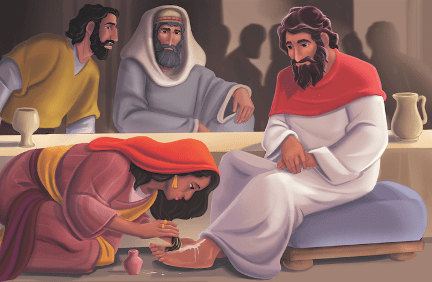
The Gospels of Matthew, Mark, and John all recounted Christ’s anointing in the last days before Passover. As Christ, His disciples, and friends all gathered to remember what God had done for His people so long ago, Mary anointed Jesus. We continue to celebrate the legacy of her worshipful act, just as Jesus proclaimed we would.
What was the significance of Mary’s extravagant offering? Why did Christ declare that she would always be remembered for the affection she displayed for her Lord?
While Judas’ eyes were blinded by his own greed, Mary’s hands were guided by devotion to Christ alone. Though it seemed her offering of such precious perfume was a waste of resources, her reverence was not lost on Jesus. He deemed the costliness of her worship to be noble and exemplary. A year’s worth of oil was worth less to her than this opportunity to worship Him there in His presence. She found herself unwilling to waste such an occasion to showcase His worth before all who were assembled in Simon the Leper’s home.
To Jesus, it did not matter where the cost of the oil went, so much as the fact that she offered it up to Him in worship. So often, those on the outside wish to find the worth of our worship through a worldly lens. However, Christ is more interested in the obedience of our hearts. The joy in our giving is of greater value than any price tag it may bear.
Mary’s choice to anoint the Lord with this costly oil became preparation for His burial; her sacrificial choice to honor Him with all she had was not put to waste. In fact, it helped establish her legacy in Scripture and even brought Christ one step closer to fulfilling the Old Testament prophecy.
Explain to kids that genuine worship, even at its costliest, is never wasted because He is worth more than all the treasures of the world. Mary’s opportunity to demonstrate Christ’s value before the others was what set her apart. How can we lead our kids toward lives of genuine devotion to Christ?
Check out The Gospel Project At Home for resources designed to help you lead a family worship experience as well as suggestions for morning and evening prayer times and family activities.
FAMILY TALKING POINTS
CHRIST CONNECTION
This is the big idea of how this week’s Bible story points to Jesus.
- Babies & Toddlers: Jesus deserves to be worshiped. He died to rescue people from sin.
- Younger Preschool: Jesus is most important, and He deserves to be worshiped. Jesus died to rescue people from sin. He was buried and then rose from the dead.
- Older Preschool: Mary did the right thing by pouring oil on Jesus. She worshiped Him. Jesus is most important, and He deserves to be worshiped. Jesus knew that He was going to die to rescue people from sin. He would be buried and then rise from the dead.
- Kids: Pouring the expensive oil on Jesus was not a waste; it was worship. By allowing Mary to anoint Him, Jesus showed that He is more valuable than anything. Jesus knew He would soon die, be buried, and rise from the dead on the third day to rescue sinners.
BIG PICTURE QUESTION & ANSWER
This is an important biblical truth that your child will encounter each week of this unit.
- Younger Preschool: How is Jesus the perfect Priest? Jesus gave His life for us.
- Older Preschool: How is Jesus the perfect Priest? Jesus gave His life as the perfect sacrifice for sin.
- Kids: How is Jesus the perfect Priest? Jesus was the perfect sacrifice for sin, and He speaks to God the Father for us today.
KEY PASSAGE
This is a Bible verse that relates to what your child will encounter each week of this unit.
- Babies & Toddlers: Jesus never sinned. Hebrews 4:15
- Younger Preschool: Jesus lived a perfect life. Hebrews 4:15
- Older Preschool: For we … have a high priest … who has been tempted in every way as we are, yet without sin. Hebrews 4:15
- Kids: For we do not have a high priest who is unable to sympathize with our weaknesses, but one who has been tempted in every way as we are, yet without sin. Hebrews 4:15
** Next week: Jesus Shared a Last Meal (Matthew 26; Mark 14; Luke 22)
 Imago Dei Church Kids Ministry